
Last updated November 22, 2026
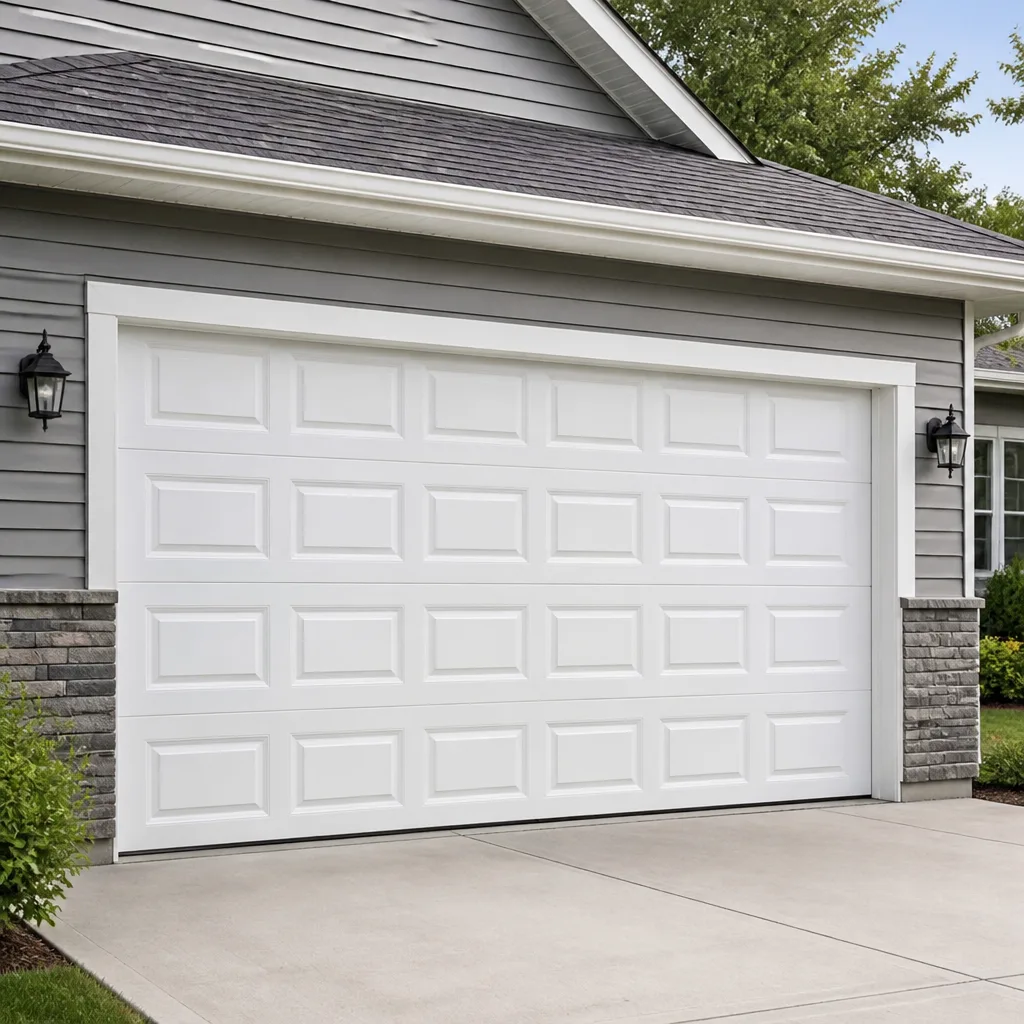 Raised-panel steel
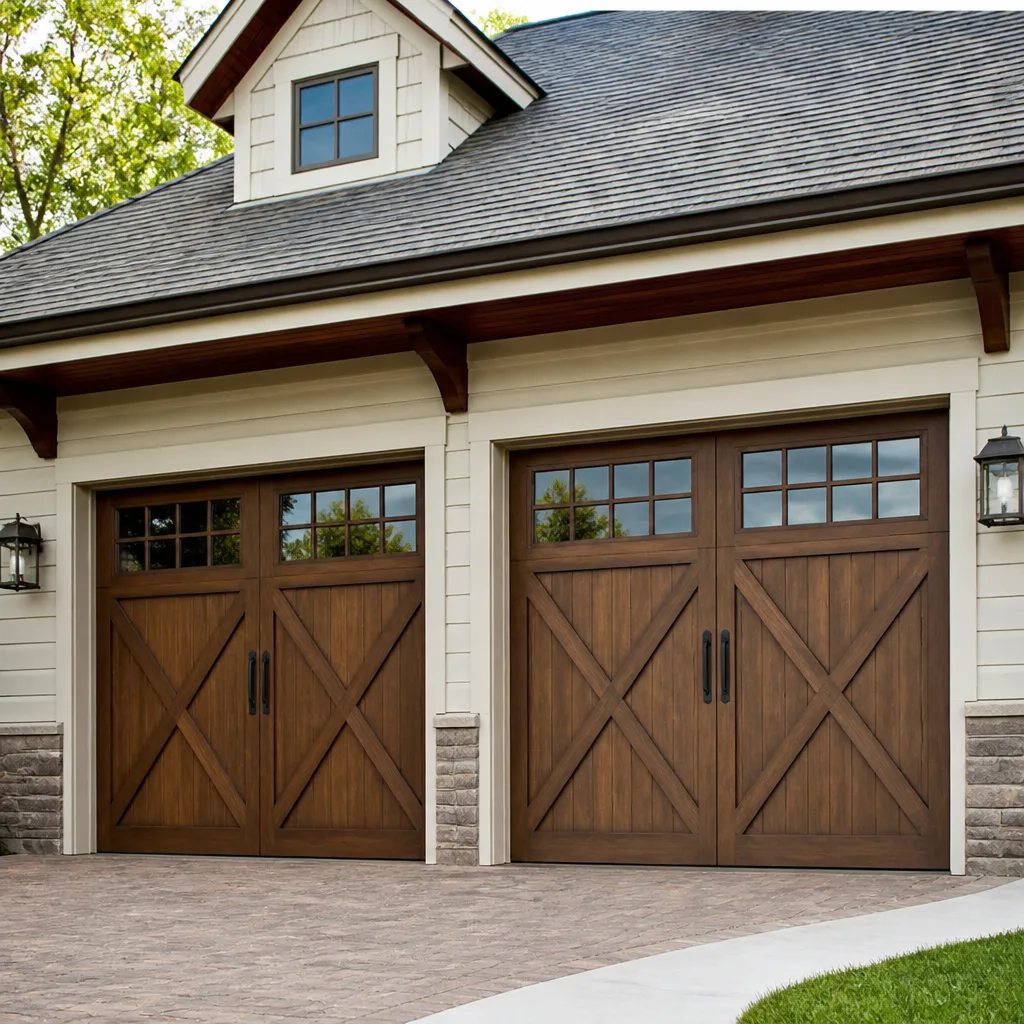 Carriage house
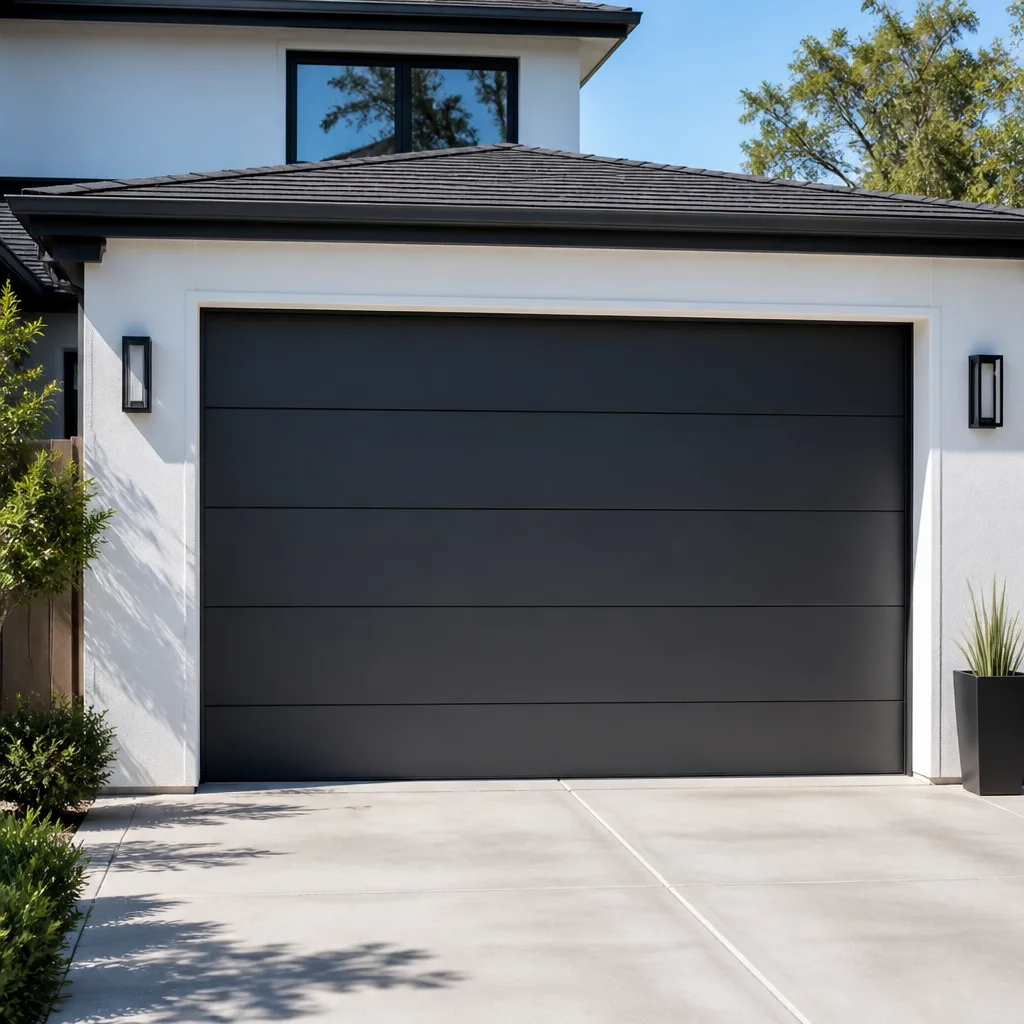 Modern flush
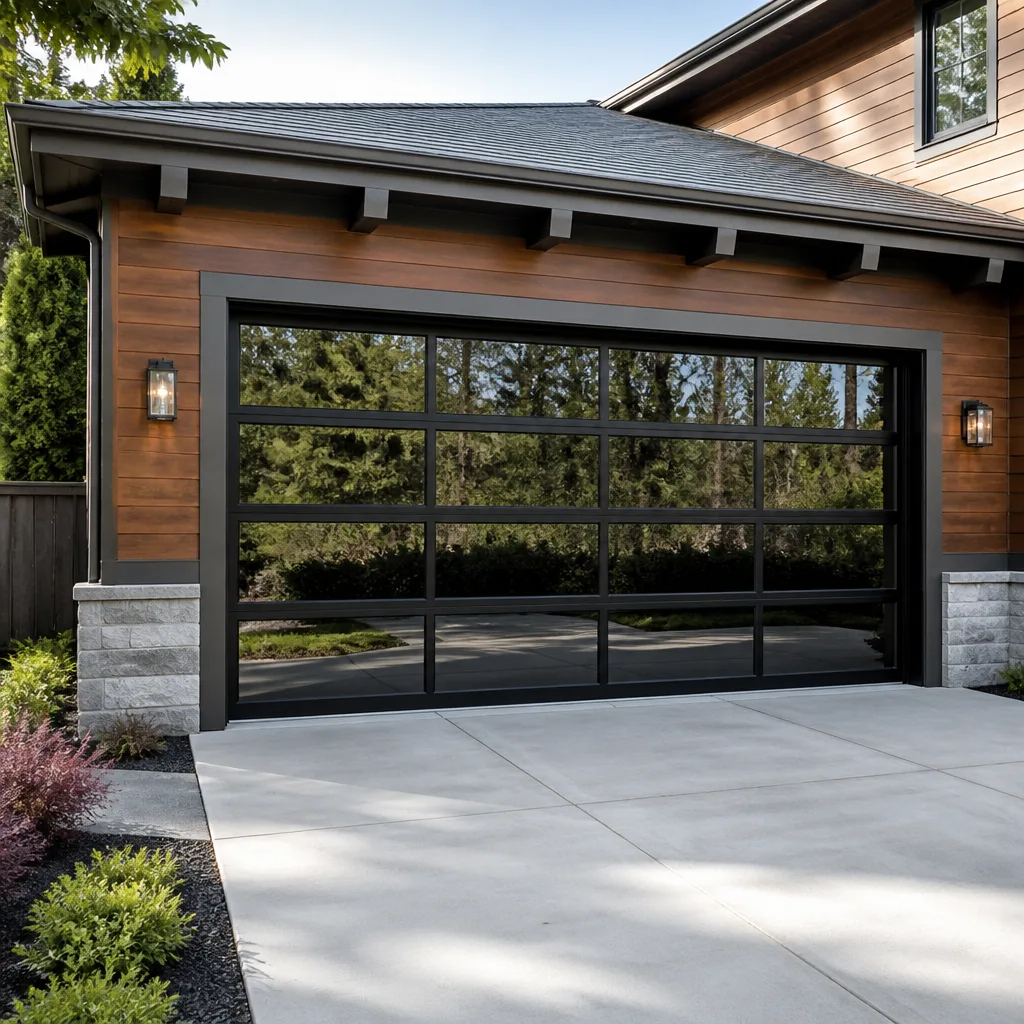 Full-view glass
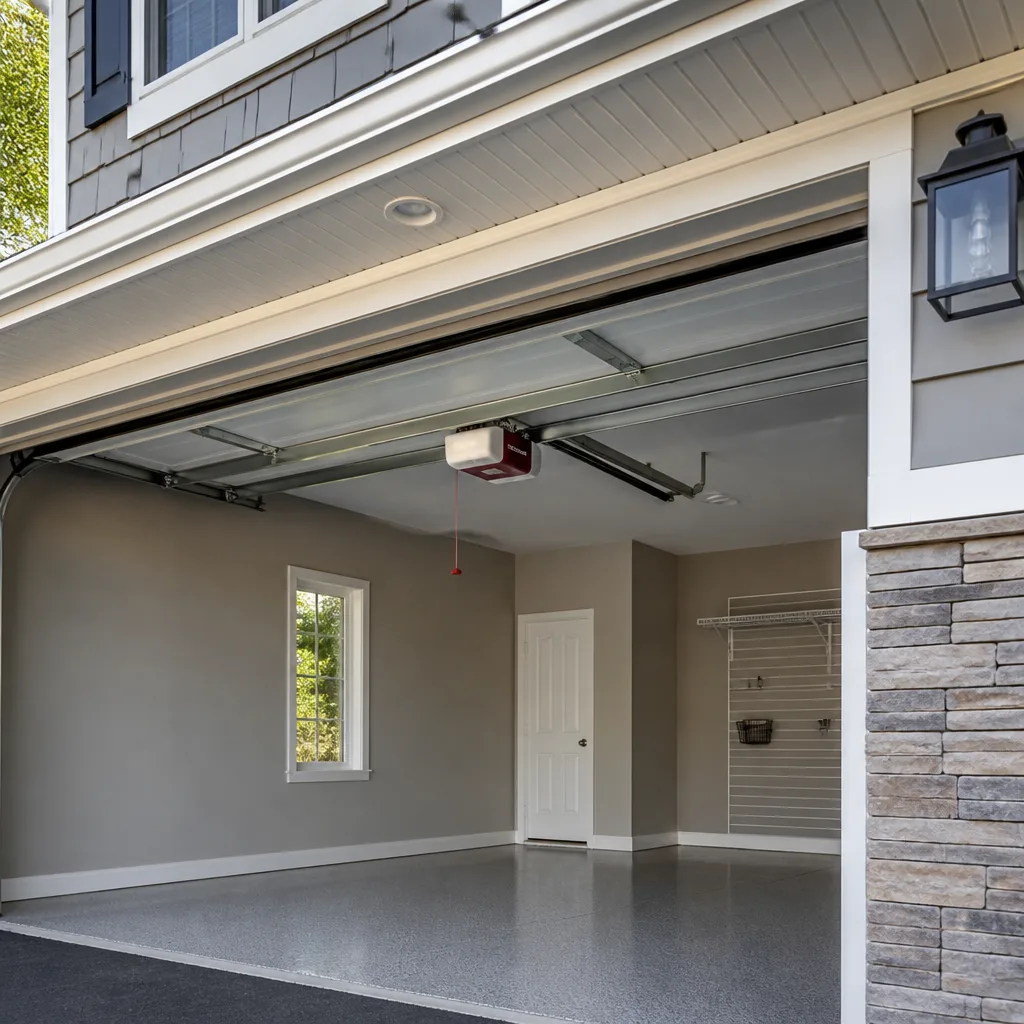 LiftMaster openers
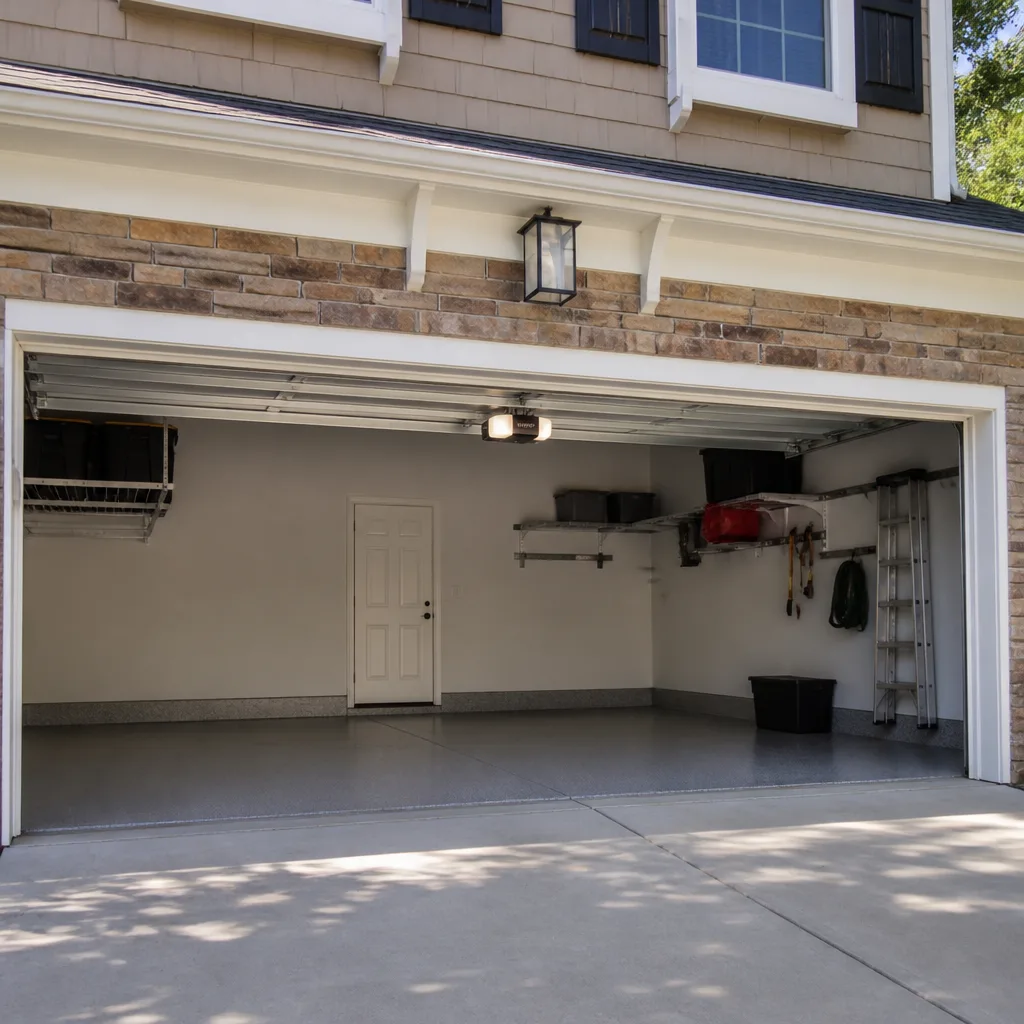 Chamberlain openers
Full 25-point door and opener safety check with every visit - springs, cables, rollers, tracks, and your LiftMaster or Chamberlain opener included
You get a price before we start. It does not change when the pro arrives.
Get your free estimateDIY vs Professional Garage Door: The Edison Homeowner’s Decision Guide
Most garage door advice treats DIY versus professional as one decision made once. That framing causes real trouble. A garage door is a system of parts with wildly different risk profiles, and treating a sensor adjustment the same way you’d treat a torsion spring is how injuries happen. Springs are sold openly at hardware stores in Edison, and the packaging won’t tell you that a wound torsion spring holds enough stored energy to break a wrist or cost you an eye if it releases wrong. This guide hands you a task-by-task framework instead: what you can safely do yourself, what you shouldn’t touch, how to spot a bad tutorial, and what the cost math actually looks like in Edison before you pick up a wrench.
Quick Answer
In Edison, routine garage door upkeep is genuinely DIY-safe, but spring, cable, and high-tension hardware work is not. Those components store dangerous energy, and one wrong release can injure you or wreck the door. If the job involves loosening a spring, cutting a cable, or realigning a door that has come off its track, call a professional. If it’s lubrication, sensor alignment, or a travel-limit tweak, you can handle it with basic tools and a careful eye.
Styles & brands we work with
- Raised-panel steel
- Carriage house
- Modern flush
- Full-view glass
- LiftMaster openers
- Chamberlain openers
Table of Contents
- Task-by-Task Classification: What’s Safe and What Isn’t
- Why Spring Work Sits in Its Own Category
- The Tools Spring Work Requires (and Why Their Absence Disqualifies You)
- How to Evaluate a Garage Door Tutorial Before You Trust It
- New Jersey Insurance and Liability When DIY Goes Wrong
- The Cost Math: DIY vs Professional in Edison
- How Edison’s Climate and Housing Shape the Decision
- A Maintenance Routine That Keeps You Out of the Dangerous Zone
Task-by-Task Classification: What’s Safe and What Isn’t
Here’s the honest split. Roughly a third of what homeowners ask about is safe DIY territory. The rest ranges from risky to genuinely dangerous, and the categories don’t blur together once you know which is which. This classification is where most homeowners go wrong: they learn one easy task and assume the rest of the door works the same way.
Genuinely DIY-Safe
- Lubrication. Hinges, rollers, and the opener’s rail take a white lithium grease or silicone spray every few months. No stored energy is involved. This is quiet, useful maintenance.
- Safety sensor alignment. If the opener won’t close because the sensor beams are misaligned, you can nudge the sensor brackets until the indicator lights go steady. No tension, no moving door under load.
- Travel limit and force adjustment. Modern openers from LiftMaster and Chamberlain have adjustment dials or a menu on the motor head. You can set how far the door travels and how hard it pushes to close. Follow the opener manual, not a video.
- Cleaning and visual inspection. Looking for rust, loose bolts, worn rollers, or frayed cables costs nothing and catches problems early.
Not DIY-Safe
- Torsion spring replacement or adjustment. This is the single most dangerous job on any garage door. We’ll explain why in the next section.
- Extension spring replacement. Slightly less concentrated energy than torsion, but still dangerous and still requires proper winding bars or restraint procedures.
- Cable work. Cables hold the door’s weight in tension. A cable that snaps under load is unpredictable.
- Track realignment after a door comes off track. A door that has jumped its track may be holding a spring under unusual load. Pushing it back into place can release it.
- Panel replacement on a door under spring tension. Removing a section changes the door’s balance and can shift load onto the springs.
- Opener replacement where wiring or new circuits are involved. If your opener needs a new electrical outlet or rewiring, that’s electrical work, and it’s outside the garage door trade.
If you’re looking at anything in the second list and thinking it looks manageable, that’s worth noticing. Springs and cables don’t look dangerous. That’s the trap.
Why Spring Work Sits in Its Own Category
A torsion spring isn’t a component you repair. It’s a component you release, replace, and re-wind, and the winding process is where the energy lives. A wound torsion spring carries enough stored force to lift a door weighing hundreds of pounds. Release it incorrectly and that force travels through you. We’ve worked on doors all over Edison, from older homes near the Clara Barton neighborhood to newer builds off Route 1, and the physics are identical in every one.
The reason this matters in the DIY conversation is that spring damage often arrives with no warning. A door that’s been working fine will, one morning, simply not lift, or lift a foot and stop. That’s usually a broken spring. From the outside, it looks like a fixed mechanical problem and an obvious fix. It isn’t. The door is now dead weight on a frame that wasn’t designed to carry it, and the spring you’d need to remove is either already broken (fine) or wound under the tension that’s now holding the door (not fine). You can’t tell which from a visual glance.
What “Stored Energy” Actually Means
Think of a wound torsion spring as a compressed tool. The energy is released in a fraction of a second, and the spring or its hardware becomes the projectile. Torsion springs sit on a solid steel shaft with set screws and winding cones. If a winding bar slips while the spring is under tension, the bottom of the bar swings down with the full stored force. That swing is the injury mechanism: a bar in your hand becomes a lever slamming toward your face or your arm. The spring itself can also fracture and throw pieces.
That’s why spring repair isn’t a handyman task dressed up as a specialty. It requires training, and it requires a technician who has done it enough times to have a physical feel for tension. When you call us about garage door spring repair, you get someone whose job this is, not a generalist guessing at the hardware.
This is also where brand knowledge matters. A Wayne Dalton TorqueMaster spring system works differently from a standard torsion tube, and Wayne Dalton doors are common in Edison. A Craftsman opener wired to a door with a specific balance setup behaves differently than a LiftMaster setup on the same door. Spring and opener work is always system-specific, and a technician who knows your exact system will diagnose it faster and safer.
The Tools Spring Work Requires (and Why Their Absence Disqualifies You)
Homeowners sometimes ask whether a spring job is doable with the right tools. The honest answer is that the right tools are the bare minimum and they don’t make the job safe for an untrained person. But the tool question is still useful, because it separates real spring work from people who watched a video once and bought a pair of locking pliers. Here’s what professional spring work actually requires.
- Winding bars sized to the spring cone. These are not adjustable wrenches. They’re specific steel bars that fit the winding cone’s holes exactly. The wrong size slips, and slipping under tension is exactly what injures people.
- Properly rated locking pliers or vise grips for holding the shaft. Positioned so a slip is caught by a stop, not by your hand.
- A torsion spring scale or wire gauge chart. Springs are specified by wire size, inside diameter, and length. A mismatched spring either doesn’t balance the door or over-tensions the system. This is where a lot of DIY failures start: the wrong spring, correctly installed.
- Manual winding-handle familiarity. You need to know how many turns to give a spring for your specific door height. This isn’t guessable.
- A way to safely hold the door in place. A door with a released spring is dead weight, and if it drops while your hands are near the hinges, the door frame becomes the hazard.
- Knowledge of how your specific door brand balances. A Raynor door with a specific spring configuration doesn’t release the same way a generic torsion setup does.
If you don’t have items one through six, the answer is not “improvise.” It’s “stop.” Lack of the right tools isn’t a small inconvenience to work around; it’s the signal that this is a professional job. Any tutorial that starts with “grab a couple of screwdrivers” for spring work is telling you something about itself.
How to Evaluate a Garage Door Tutorial Before You Trust It
Online garage door content ranges from genuinely useful to actively dangerous, and both types can look polished. The good news: credible garage door instruction has some predictable characteristics, and the warning signs of underqualified content are easy to spot once you know them. Before you trust any video, run it through this filter.
Signs of Credible Content
- It tells you when not to attempt the job. Real instructional content about springs, cables, or off-track doors leads with the risk and the conditions under which you should not proceed. A video that never discourages anyone is a warning sign on its own.
- It refers to specific brand components. A technician who works on LiftMaster, Chamberlain, Genie, Clopay, Amarr, Wayne Dalton, Craftsman, and Raynor doors uses the actual part names. Vague content that never mentions your brand’s hardware is probably generic.
- It uses the correct tools on screen. Winding bars, not screwdrivers. Rated locking pliers, not adjustable wrenches. A video showing the wrong tool for spring tension is disqualifying regardless of how confident the presenter sounds.
- It states limits. “This may not work if your door has a TorqueMaster system” or “check your specific opener manual for these settings” are marks of someone who has actually done the job.
Warning Signs
- A spring or cable job presented as a weekend project with no safety discussion.
- No mention of the door’s brand, model, or spring spec.
- Instructions that skip the winding count or say “wind it until it feels right.”
- Steps compiled from a manufacturer manual with no practical detail about how a real job goes.
- A presenter who never mentions when to call a professional.
Our rule of thumb: if a tutorial is trying to make a dangerous job seem easy, close the tab. The best garage door content teaches you to recognize your limits, not to overrule them. If a video you trust takes you to the edge of what you can safely do, that’s the moment to call it. Our garage door repair team would rather answer a question that saves you an injury than examine a door that went sideways.
New Jersey Insurance and Liability When DIY Goes Wrong
The insurance side of DIY garage door work gets almost no attention online, and it’s worth understanding before you decide to save a few dollars. You should check the specifics with your own insurer, since coverage terms vary, but there are two broad scenarios worth thinking through.
If You’re Injured During DIY Repair
Homeowners insurance doesn’t usually cover injuries to the homeowner or their household in the way it covers guests. A spring injury sustained while doing the repair yourself will typically go through your health coverage, not your home policy. That’s a costly difference. The medical cost of a serious hand or face injury doesn’t stay a weekend project.
If the Work Causes Damage
If a DIY spring failure or off-track incident damages a vehicle in the driveway, your garage door, or a neighbor’s property, whether your homeowners policy responds depends on your specific coverage and how the damage occurred. Some policies treat poor workmanship as an exclusion; others respond to resulting damage. The practical point is that the DIY savings can become a claim dispute with your insurer if things go wrong.
Why Professional Work Reduces Your Exposure
When the local pro does the spring work, the repair is a completed trade service, not a homeowner project. A vetted local professional carries the licensing and insurance their state requires, which means the injury and damage scenarios that land on you as a DIYer are handled within the professional’s coverage, not yours. If you end up needing to sell the house and a buyer’s inspector flags a garage door, work documented by a professional is easier to explain. This is why we say spring work is not a cost decision on the professional side; it’s a liability one. If you’re unsure whether a job is DIY or not, call (855) 506-5081 and ask. We’ll tell you honestly.
The Cost Math: DIY vs Professional in Edison
The math on DIY garage door work only works out for some tasks. For others, it doesn’t work out at all once you account for parts, time, and risk. Here’s an honest breakdown for Edison homeowners, using typical estimated ranges. These are estimates; the written quote you get on-site is what sets the final price.
Where DIY Saves Money
- Lubricant. A can of white lithium grease or silicone spray runs around $8 to $15. Available at hardware stores around Edison or online. This is a clear DIY win.
- Safety sensor alignment. Usually costs nothing. You’re adjusting brackets with a screwdriver. If a sensor itself is bad, a replacement sensor typically runs $20 to $40 and installs in a few minutes.
- Travel limit and force adjustment. Free if you have the opener manual. If you don’t, the manufacturer’s website has it for LiftMaster, Chamberlain, and Genie openers.
- Roller replacement on a door with the tension released by a technician. You can replace rollers once the door is safe to work on. Rollers themselves run roughly $5 to $15 each. The key is the door must be properly de-tensioned first.
Where DIY Costs More Than It Saves
- Springs. A replacement torsion spring typically costs $40 to $110 in parts alone if you buy it yourself. A professional garage door repair spring job typically runs $180 to $340 for one spring, and a matched pair is usually replaced together, so a pair costs about twice that. The professional cost includes the correct spring spec, trained labor, and the safety of not being the person holding a wound spring. Buying the wrong spring and getting the door stuck or unbalanced costs more than the savings.
- Opener repair. A new opener runs $150 to $400 for the unit. If you install it yourself and the door’s balance is off, the opener can burn out its motor. Professional opener diagnosis is often cheaper than replacing an opener you just bought.
- Full door replacement. Parts alone for a new door run four figures in most sizes. DIY installation of a new door is a multi-person job with real risk to the door frame and the door itself. This is where DIY is not even on the table for most homeowners.
One more point on sourcing: the parts you find at the big-box store in Edison aren’t always the right spec for your door. Amazon listings rarely tell you the wire gauge, diameter, and length the way you need them. A professional measures your specific spring, matches it, and if the spring is wrong for the door, they fix that instead of shipping you a replacement for a part that was already a mismatch. Our garage door opener repair work operates the same way: diagnose the system you have, work on the exact brand, and don’t guess.
How Edison’s Climate and Housing Shape the Decision
Edison sits in a part of New Jersey with hot, humid summers and cold winters, and that cycle is hard on garage door hardware. Springs, steel cables, and hinge wear are all affected by repeated heating and cooling, and stretches of high humidity raise the corrosion risk on hinges, rollers, and track. That’s part of why we see so much spring and hinge wear in Edison homes compared to a milder climate. The seasonal swing means a door that looks fine in April can need attention by November.
The housing stock matters too. Edison has a mix of older homes and newer construction, and that affects what you’ll find when you open up a garage door. Older doors may carry legacy opener systems, and you’ll find LiftMaster, Chamberlain, and Genie units that have been there for a long time. Newer homes often have smart openers like myQ or Genie Aladdin. Either way, knowing the actual system on your door matters. A Wayne Dalton door with an older opener has different service requirements than a newer Raynor setup, and treating them the same is how you end up buying the wrong part.
There’s also a practical limit in Edison: many homes have the door as the primary access to the garage, and a door that won’t open or close strands a car. That’s a strong argument for professional spring service on a schedule rather than waiting for a failure. If you want a balanced view of when the door needs a professional look, the range of work we handle is laid out on our main page for Edison Garage Door Repair Pros.
A Maintenance Routine That Keeps You Out of the Dangerous Zone
The good news is that most of what keeps a garage door out of trouble is squarely in DIY territory. Regular upkeep reduces the number of times you’re ever confronted with a failure and makes the springs last longer. Here’s a routine that works for Edison homes.
- Lubricate hinges, rollers, and the opener rail. A white lithium grease or silicone spray every few months. Rollers and hinges first, then the opener chain or belt according to the manual.
- Test the safety sensors. Put an object in the door’s path and confirm the door reverses. Adjust the sensor brackets if the door won’t close consistently.
- Listen on the way up and down. Grinding, popping, or a door that jerks is information. Note it and have it looked at.
- Look at the springs and cables. Visible gaps in a torsion spring or a frayed cable is a stop sign. Don’t touch; call.
- Check the door balance manually. With the door closed, pull the release and lift the door halfway. It should hold roughly in place. If it drops or rises on its own, the springs need a professional look.
- Look at hinges and rollers. Worn rollers or bent hinges are easy to see. Replacing rollers is safe once the door is de-tensioned by a professional.
If your routine uncovers anything on the not-DIY-safe list, the maintenance stops there. That’s a call, not a repair. We offer free estimates on the work that follows.
Common Mistakes to Avoid
- Buying spring parts by guesswork. Two springs that look similar can be different wire gauges. The wrong spring either won’t balance the door or will over-tension the system. Measure with the door’s actual spec sheet, or have a professional do it.
- Trusting a generic tutorial for a branded door. A video made for a one-size-fits-all door can do real harm on a Wayne Dalton TorqueMaster setup or a Raynor with a specific spring configuration. Match the tutorial to your system, or stop.
- Adjusting the force setting to compensate for a failing spring. If the door stops halfway, the opener’s force setting isn’t the problem; the door’s balance is. Cranking up the force wears the opener out and hides the real issue.
- Trying to force an off-track door back into place. This is the classic setup for a spring release injury. Leave it alone until a professional can secure it.
- Greaseless thinking. Some homeowners skip lubrication because “it’s just metal.” In Edison’s humid summers, skipping grease accelerates hinge and roller wear and shortens spring life.
- Assuming a sensor problem is always an alignment problem. Sometimes a sensor is genuinely dead. If realignment doesn’t fix it, a $20 sensor swap usually does; if not, look at the opener’s logic board.
- Replacing the whole opener when one part fails. A burned capacitor or a stripped gear is a repair, not an opener replacement. Get the system diagnosed before you buy a new opener.
See the difference
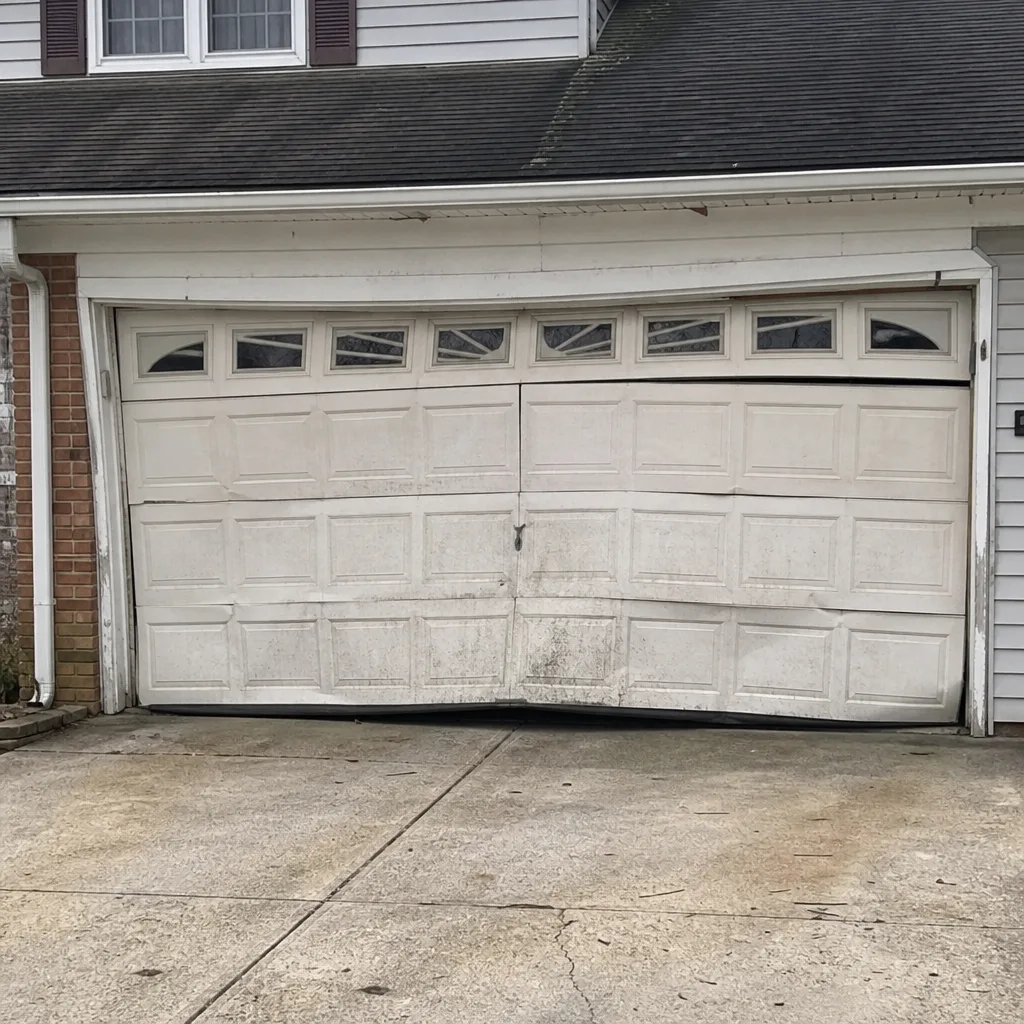 Before
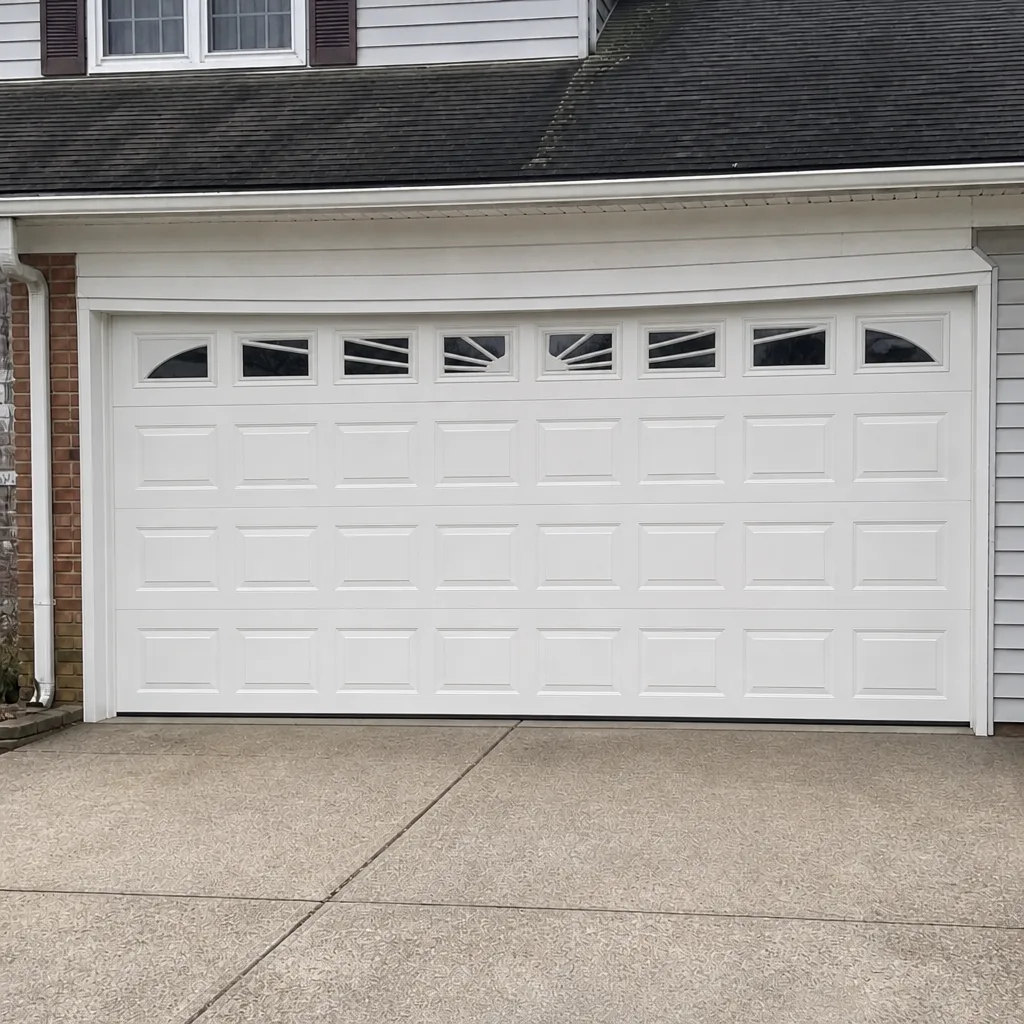 After
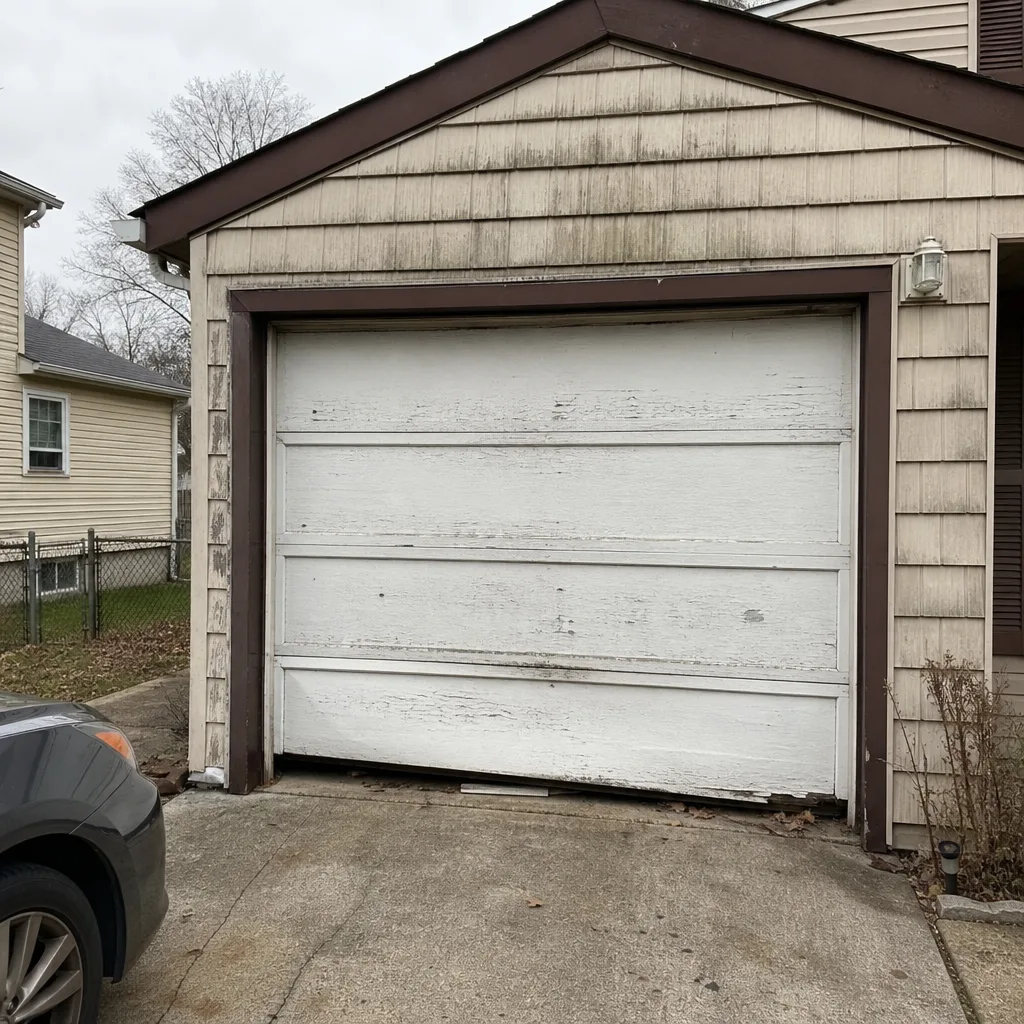 Before
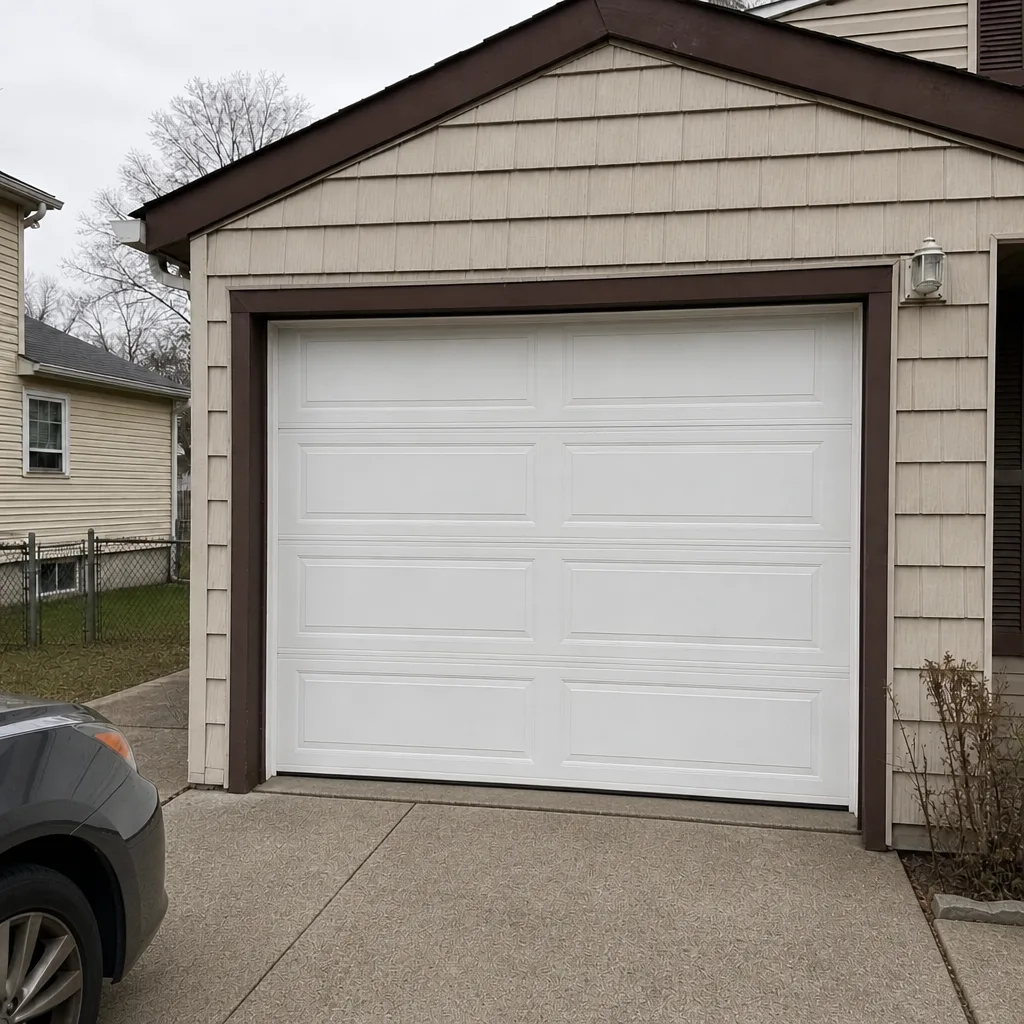 After
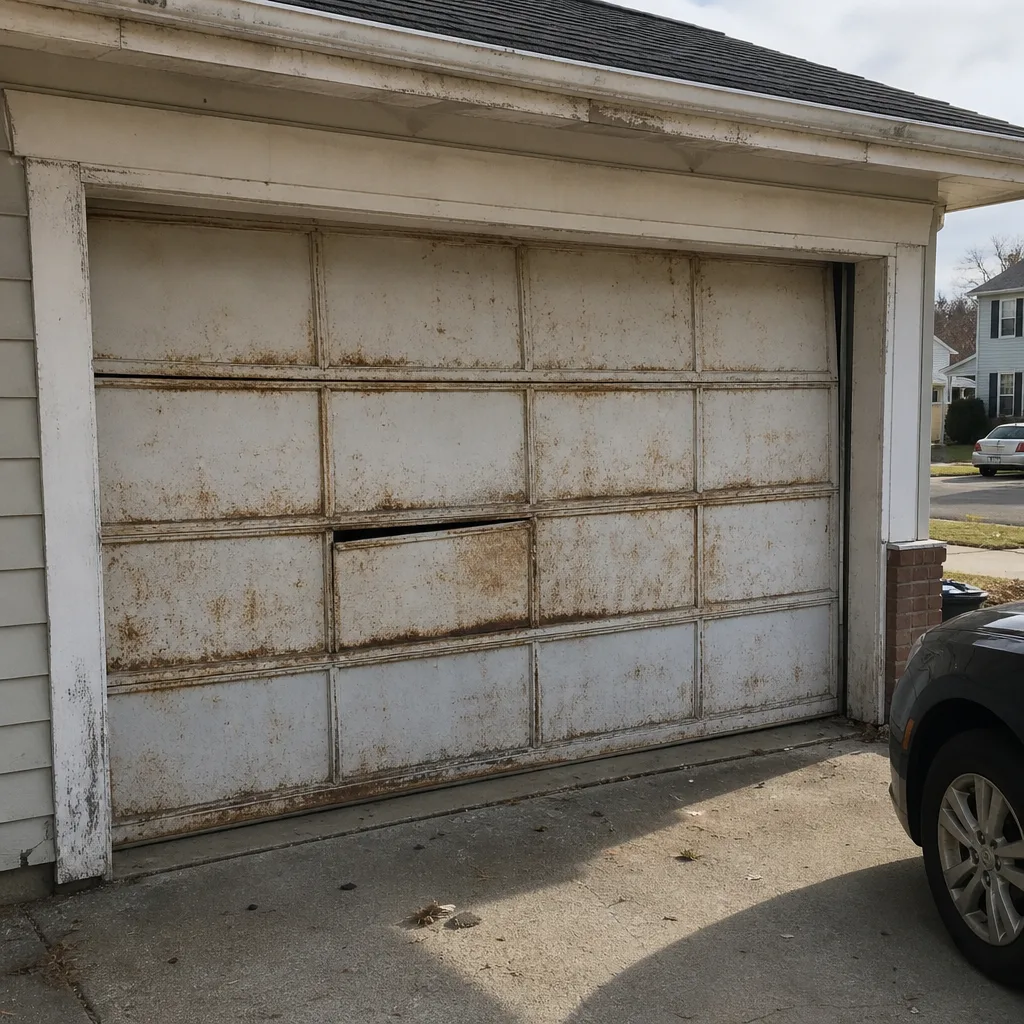 Before
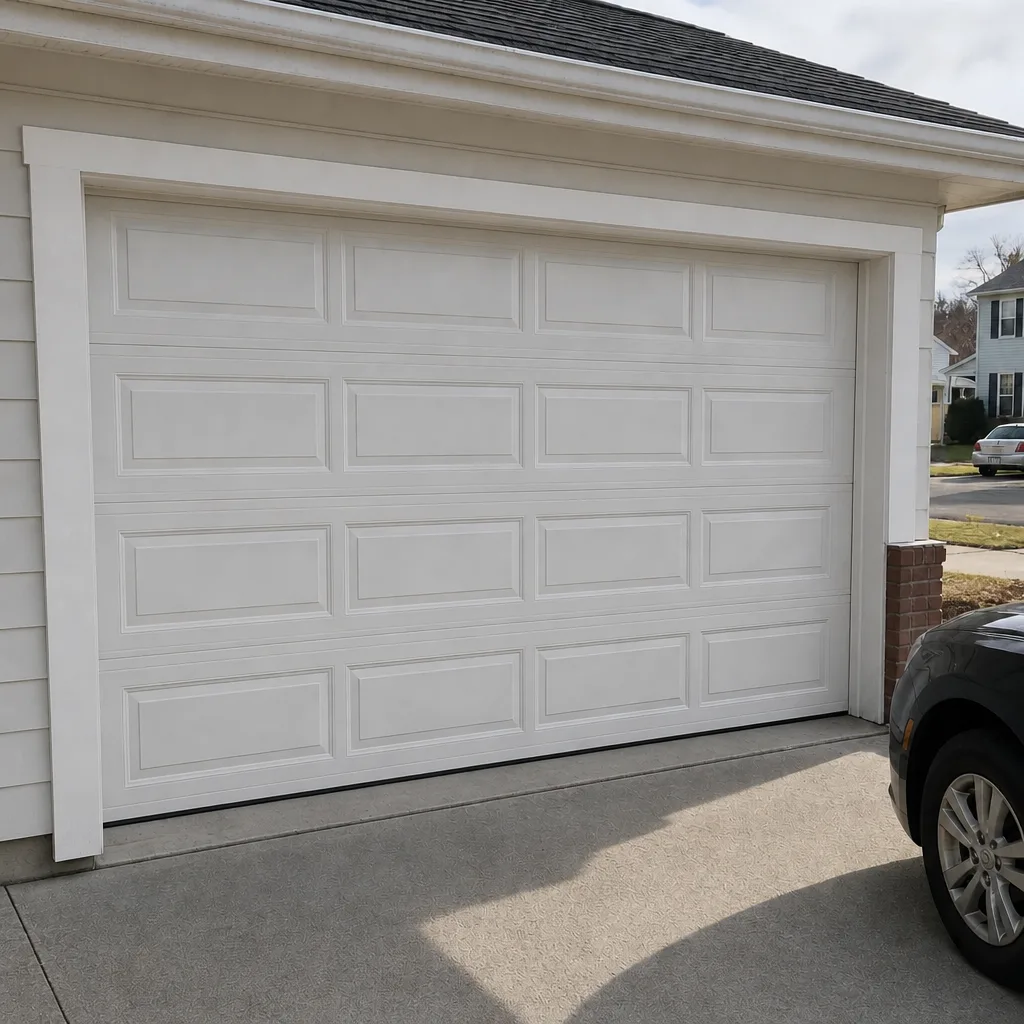 After
When to Call a Professional
Some situations are unmistakable. Call us when a spring has visibly broken, when the door won’t lift or stops partway up, when the door has jumped its track, when a cable looks frayed or has snapped, or when the door is hanging unbalanced. Call when a panel is bent enough to affect the door’s travel, and call when an opener fails and you’re not sure whether the issue is the opener or the door. Those aren’t gray areas. The gray areas are more common: a door that’s slightly stiff, a hinge that grinds, a sensor that’s inconsistent. We’d rather look at those early than after they become a spring failure.
Edison Garage Door Repair Pros offers free estimates in Edison, and the price is quoted and agreed before any work starts, so there’s no surprise on the invoice. We work on your exact system, whether that’s a LiftMaster opener and a Clopay door or a Craftsman setup in an older home. Call (855) 506-5081 for a free estimate. We answer 24/7. Fast dispatch from 7am to 7pm, Sunday through Friday. If a door fails and it’s outside those hours, we’ll book you into the next opening.
Frequently Asked Questions
You shouldn’t. Torsion and extension springs store enough energy to cause serious injury during removal or winding, and the wrong spring spec can leave the door unbalanced. Spring repair is a professional job, and it’s one we handle as a standard service rather than a referral. If you suspect a broken spring, don’t release anything yourself. Call (855) 506-5081 for an exact quote. Estimates are free.
Typical professional costs run about $180 to $340 for one spring, and since springs are usually replaced in matched pairs, a pair runs about twice that. Parts alone if you buy your own run roughly $40 to $110, but that doesn’t include the correct spec, tools, or the safety of a trained technician. The written estimate you get on-site is the price. Call (855) 506-5081 for a free estimate.
Same-day service is available for repair work, and we answer the phone 24/7. Fast dispatch runs from 7am to 7pm, Sunday through Friday, and a call outside those hours is booked into the next opening. If the door is stuck shut or stuck open, call (855) 506-5081 and we’ll tell you the soonest we can be there.
No. The written estimate is the price, and we don’t start work until you’ve agreed to it. If the door reveals something the estimate didn’t cover, you’ll hear about it before we do anything. Call (855) 506-5081 for a free estimate.
The vetted local professional who does the work is licensed and insured as their state requires. Our technicians have up to 11 years of experience, and they work on your exact system, whether that’s LiftMaster, Chamberlain, Genie, Clopay, Amarr, Wayne Dalton, Craftsman, or Raynor. Call (855) 506-5081 to ask any questions about credentials.
Yes, sensor alignment and travel-limit adjustments are genuinely DIY-safe on most openers from LiftMaster, Chamberlain, Craftsman, and Genie. They involve no stored spring tension. Follow the opener manual rather than a random video, and if the door still misbehaves after adjustment, the underlying problem is probably the door’s balance and not the opener.
The Bottom Line
The DIY versus professional question isn’t one decision; it’s a series of small ones, and they don’t all get the same answer. Lubrication, sensor alignment, and travel-limit adjustments are yours to handle, and doing them regularly keeps the door out of trouble. Spring, cable, off-track, and panel work belongs to a professional, not because it’s inconvenient but because the stored energy involved makes it dangerous. Add the insurance math and the cost math, and the split becomes clear: save on the easy work, call a professional for the dangerous work. If you’re not sure which side of the line you’re on, call (855) 506-5081 for a free estimate. We’ll give you a straight answer.
Written by the team at Edison Garage Door Repair Pros.